Tazawako · Kakunodate · Akita
PJ Valley
Leave this land more beautiful a century from now.
100Years
PHILOSOPHY / OUR PURPOSE
A century from now,
leave a more beautiful land.
This is PJ Valley's purpose and the reason behind every venture and decision. We do not expect one generation to finish it. We aim to pass on the land's health, beauty, and productive capacity to those who follow.
CONCEPT / WHAT WE ARE BUILDING
We are growing the land itself, rather than creating a tourist destination.
Between Lake Tazawa and Kakunodate, we envision a living landscape where forests, farming, horses, food, craft, hospitality, work, and everyday life meet.
Six principles for decisions
These principles turn our purpose into everyday choices. We ask what will remain on the land in a hundred years, ahead of scale or speed.
Land before tourism
Care for forests, water, paths, fields, and views before drawing visitors.
Produce while conserving
Build livelihoods into the land's cycles, bringing stewardship and income together.
Let real time leave its mark
A landscape gains character through continued use, rather than staged nostalgia.
Start small and take root
Test our relationship with the land before expanding.
Invite people with depth
Welcome people who want to grow into their craft here, as well as established experts.
Leave choices for the next generation
Do not use up future possibilities for short-term returns.
Put principles into practice
For each principle, we describe what we will do and what we will avoid across our work.
PRINCIPLE 01
Build the land before tourism
Before building inns or shops, study waterways, vegetation, soil, views, and how people move through settlements. Begin with neglected forest edges and idle fields. Measure the condition of the land before visitor numbers.
What we will doSurvey watersheds; map forests and fields; set landscape guidelines; secure land ownership or long-term use rights.
What we will avoidBuilding visitor facilities first, or consuming valuable lakeside and mountain land for short-term gain.
PRINCIPLE 02
Produce while conserving
Conservation need not mean leaving nature untouched. Renew forests, mow meadows, cultivate fields, and keep animals. Good production can sustain both healthy land and local employment.
What we will doSelective forestry and regeneration; woodland and meadow care; local timber; soil building; small production suited to the place.
What we will avoidPreserving scenery while losing its stewards, or pursuing yield through monoculture alone.
PRINCIPLE 03
Let real time leave its mark
We will not imitate the past with faux old houses or a staged rural aesthetic. New buildings and tools should use local materials and repairable methods. With use and care, they can become part of the place.
What we will doUse local wood, stone, earth, iron, and cloth; pass repair records and skills to the next generation.
What we will avoidUnfounded nostalgia in design, or a theme park that dates within a few years.
PRINCIPLE 04
Start small and take root
Hold a broad vision, but begin with one woodland, one field, one horse, and one building. Test the land, skills, and demand; expand only work that proves viable.
What we will doSmall plots for trials, seasonal review, reversible early investment, and open records.
What we will avoidBuilding everything at once to meet a grant deadline, or constructing facilities without operators.
PRINCIPLE 05
Invite people with depth
A place needs people with deep interests. We want to welcome those rooted in forestry, horses, brewing, dyeing, cooking, architecture, and other fields who can also cross into one another's work.
What we will doHomes and workspaces, mentorship, prototype budgets, and teams linking outside specialists with young local people.
What we will avoidMigration programs measured only by headcount, or tenants with no connection to the vision.
PRINCIPLE 06
Leave choices for the next generation
A century-long project must leave room for later generations. Keep the land connected, protect water sources and views, and make space for new uses when businesses change.
What we will doA land stewardship policy, long-term maintenance, successor development, adaptable buildings, and consideration of a fund.
What we will avoidIrreversible earthworks, oversized investments dependent on quick returns, and casual subdivision of land.
More than a single point:
a connected landscape.
From Kakunodate to Lake Tazawa, we see towns, farms, gorges, mountains, and the lake as one living area, rather than separate attractions.
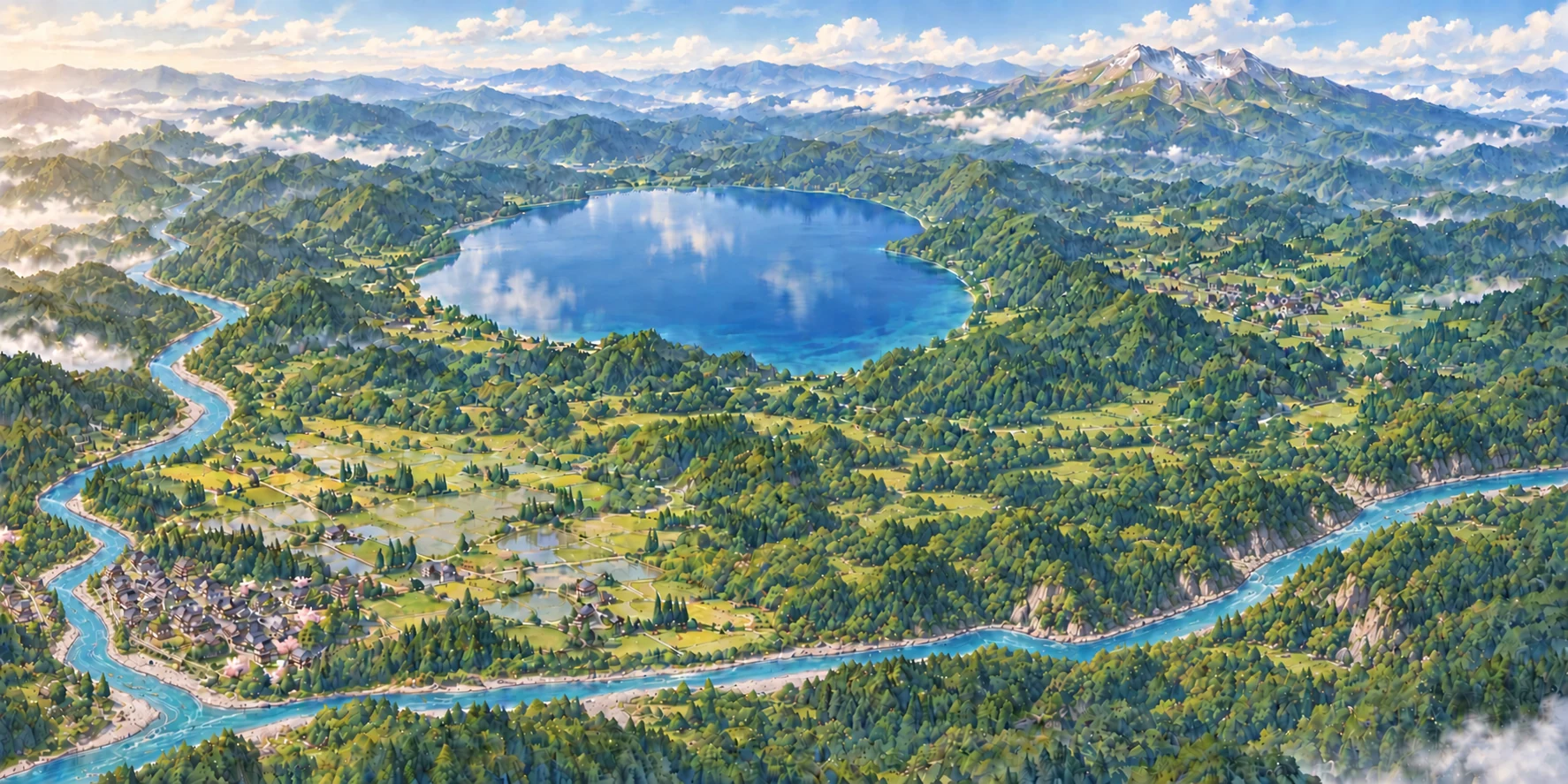 KakunodateJindaiDakigaeri GorgeLake TazawaObonaiMt. Akita-KomagatakeHinokinai RiverTamagawa River↑ N
KakunodateCulture and welcome
JindaiFarms and villages
DakigaeriWater and gorge
ObonaiDaily life and work
Lake TazawaLake and mountains
Kakunodate
A gateway for history, craft, commerce, and welcoming people.
Jindai
A village center for growing and processing, rooted in farms and settlements.
Dakigaeri
A place that embodies the continuity of water and forest and informs environmental standards for the watershed.
Obonai
A home base where people working here can live, learn, and build daily life.
Lake Tazawa
The core of a broad natural landscape connecting mountains, lake, and hot springs.
One shared outlook,
many connected livelihoods.
We aim to combine work so that soil, water, plants, animals, and human skills circulate together. Open each item to see its role and first steps. Images are conceptual illustrations.
01ForestsGrow, harvest, use, and regrow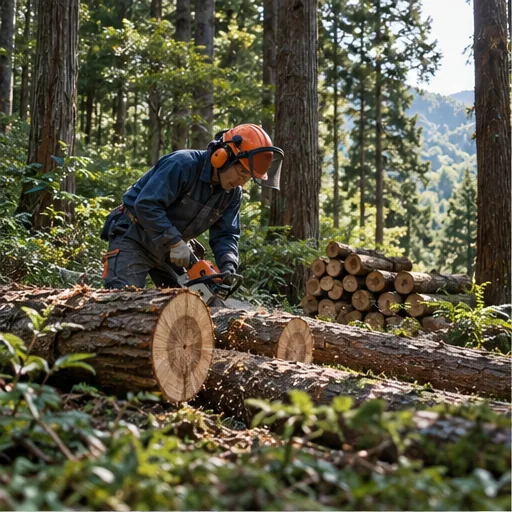
Forests are a productive foundation, not a backdrop. We read planted forests, broadleaf woods, and water source forests differently, managing timber, firewood, charcoal, wild foods, views, and disaster resilience together.
- First steps
- Forest inventory, boundary checks, a model woodland, assessment of work paths and waterways
- Connections
- Building timber, furniture, dyes, heat, horse bedding, and the setting for stays
- Measures
- Regeneration, soil loss, forest age structure, and local timber use
02Farming and livestockCare for the land and grow food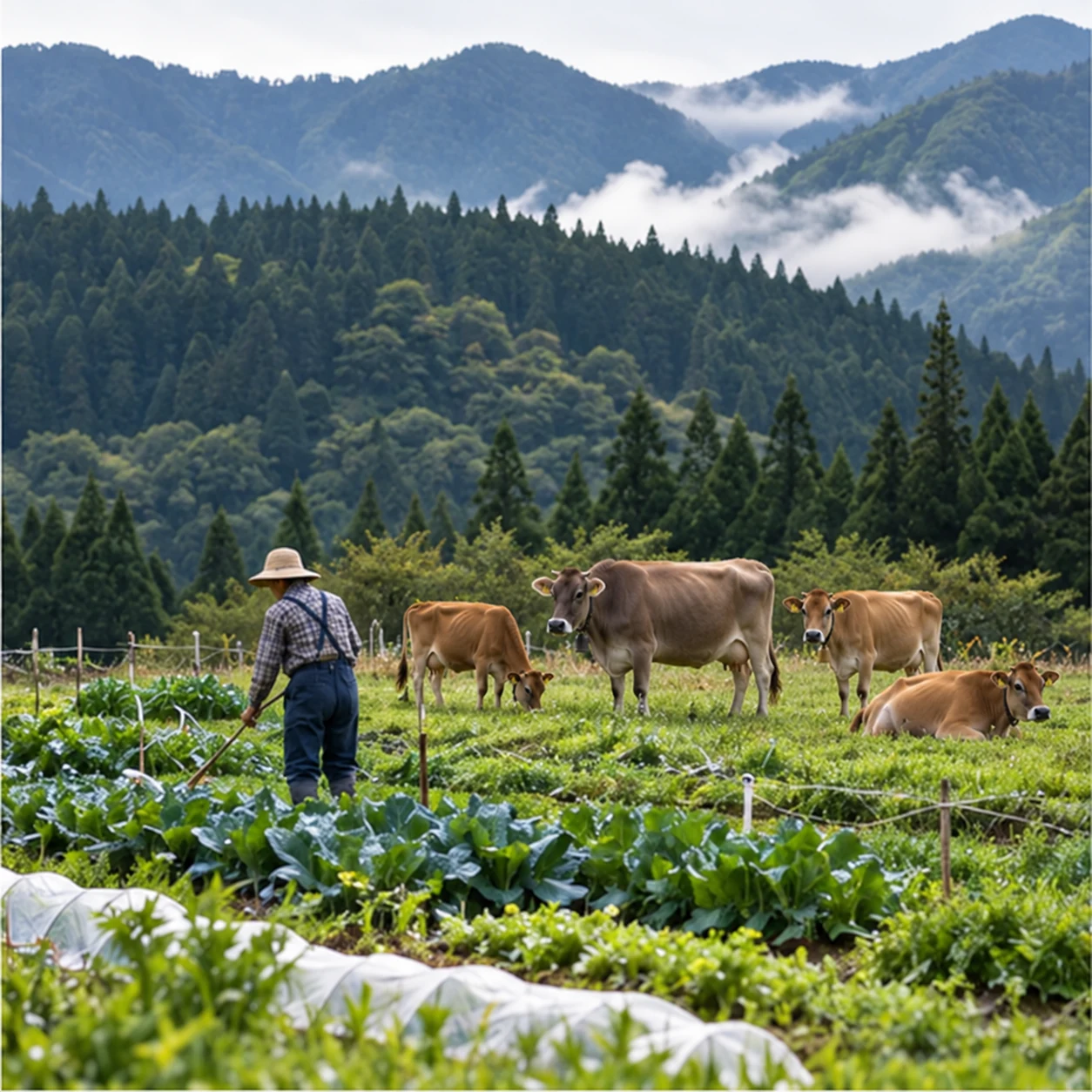
Instead of a single large crop, we envision mixed farming suited to this cold region and its seasons: rice, grains, vegetables, fruit, fodder, and small livestock, all with soil health in mind.
- First steps
- Soil and irrigation surveys, recovery of idle fields, small multi-crop trial plots
- Connections
- Restaurants, processed foods, compost, horses, and seasonal work
- Measures
- Soil organic matter, cultivated area, local consumption, and year-round employment
03Horses and wildlifeRethink how people and animals share space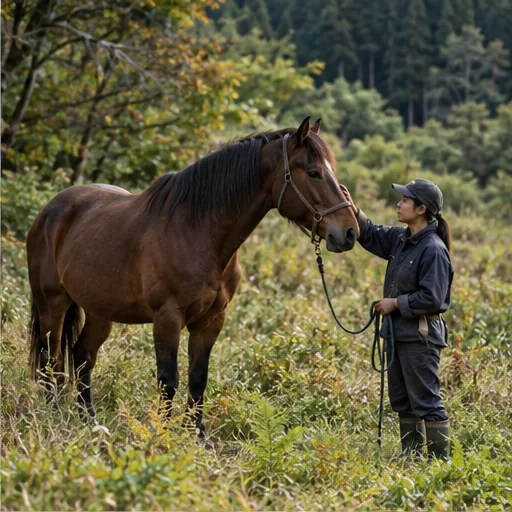
Horses can help care for meadows and forests, move people, and support learning, rather than serve as tourist displays. With bears, serow, and deer, we seek management that avoids feeding them and respects their habitats.
- First steps
- Possible grazing land, winter feed, veterinary care, and safety around fences, railways, and roads
- Connections
- Meadows, compost, forestry, tack craft, and learning
- Measures
- No accidents, meadow health, winter costs, and wildlife damage
04Food and craftTurn local materials into things for daily life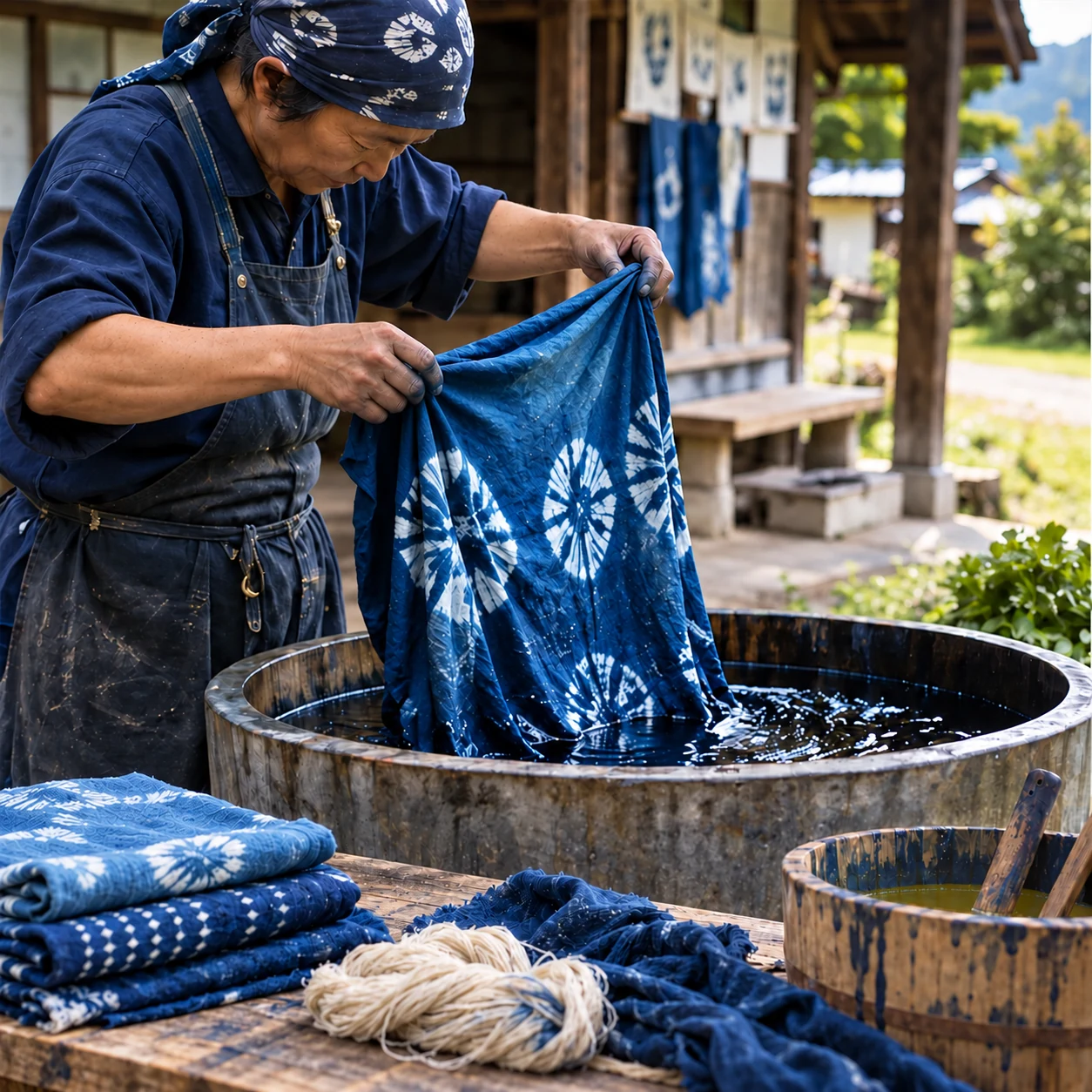
Indigo dyeing, woodworking, textiles, fermentation, brewing, and preserved foods should serve daily life, not just souvenirs. We want to explain where materials come from, who makes things, and how to use and repair them.
- First steps
- Trial indigo cultivation, staple clothing prototypes, wood and textile household goods, seasonal preserved foods
- Connections
- Fields, forests, workwear, furnishings for stays, and business customers beyond the region
- Measures
- Share of local materials, longevity of staples, repair rate, and maker income
05Stays and livingConnect visiting with living here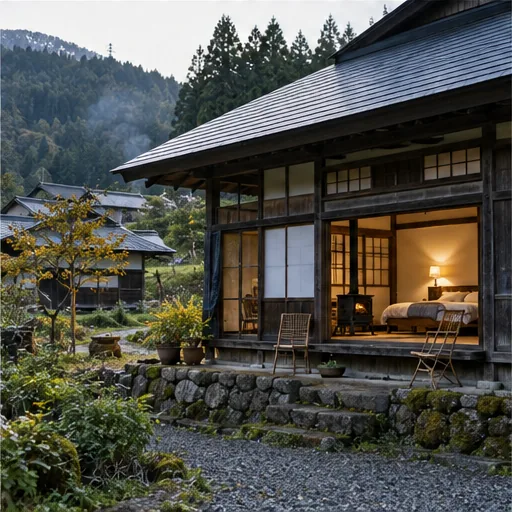
Stays should open a door to the land's work, bringing forest care, food, hot springs, tools, and quiet into one experience. Housing for the people who work here matters just as much.
- First steps
- Reuse existing buildings, create small inns, and provide homes and workshops for makers
- Connections
- Local timber, farm products, craft, guides, and a complementary role alongside hot spring towns
- Measures
- Length of stay, return visits, local procurement, and continued residence of staff
06People and learningWelcome people who grow with the land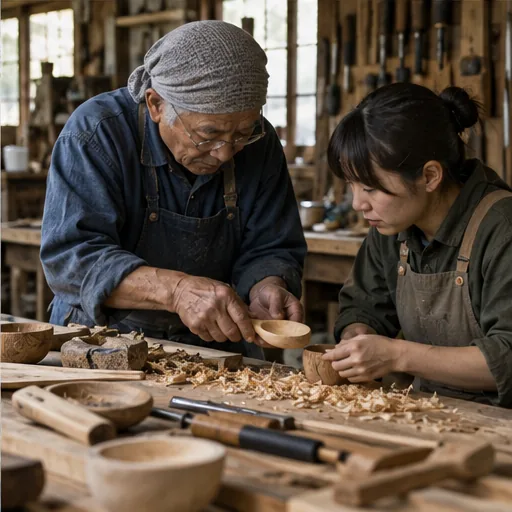
Beyond hiring for single roles, we hope people can learn several kinds of work, as farmers once did. Young people who want to develop a specialty need mentors, homes, work, and room to experiment alongside experienced practitioners.
- First steps
- Small hands-on programs, combinations of seasonal work into year-round jobs, and partnerships with universities and craftspeople
- Connections
- Cross every field of work, passing skills and ideas to the next generation
- Measures
- Retention, breadth of skills, independent ventures, and local mentorship
Not a finished master plan,
but an order in which to grow.
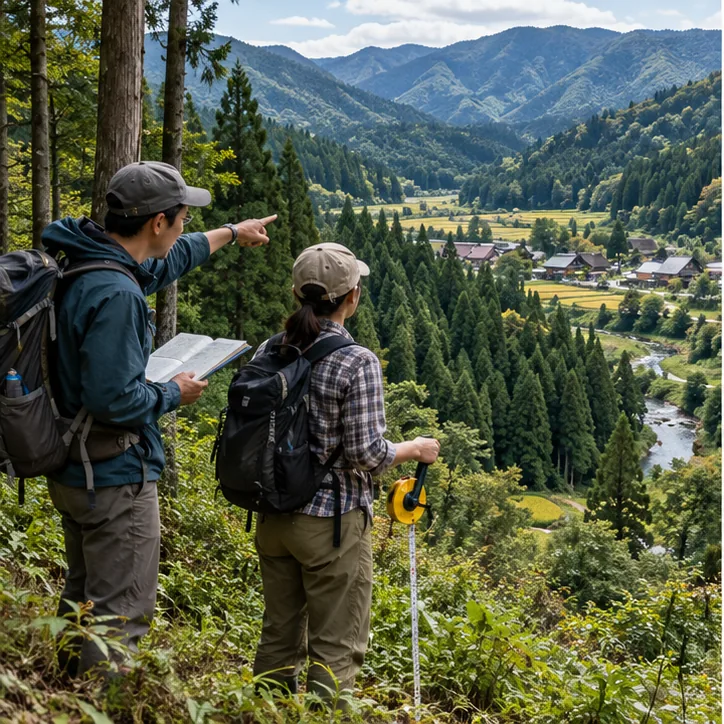
We will not launch everything at once. First understand the land, then establish small viable livelihoods, and finally build ways to pass them on. Images are conceptual illustrations.
 I
IRead the land
- Survey land, water, forests, and farms
- Secure key land
- Listen to local people and craftspeople
- Begin a small model woodland and field
Ready to advance when we can explain the land's character and what needs protection
 II
IIMake livelihoods viable
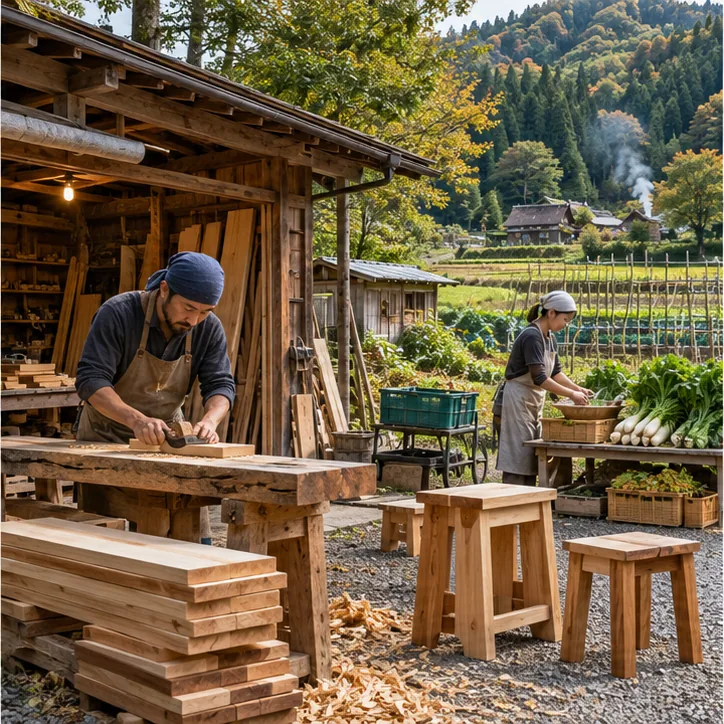
- Plan year-round work in forestry, farming, and with horses
- Develop enduring food and craft products
- Prepare homes, workshops, and a small inn
- Connect multiple sources of income
Ready to advance when several livelihoods can continue without subsidies
 III
IIIPass on the landscape
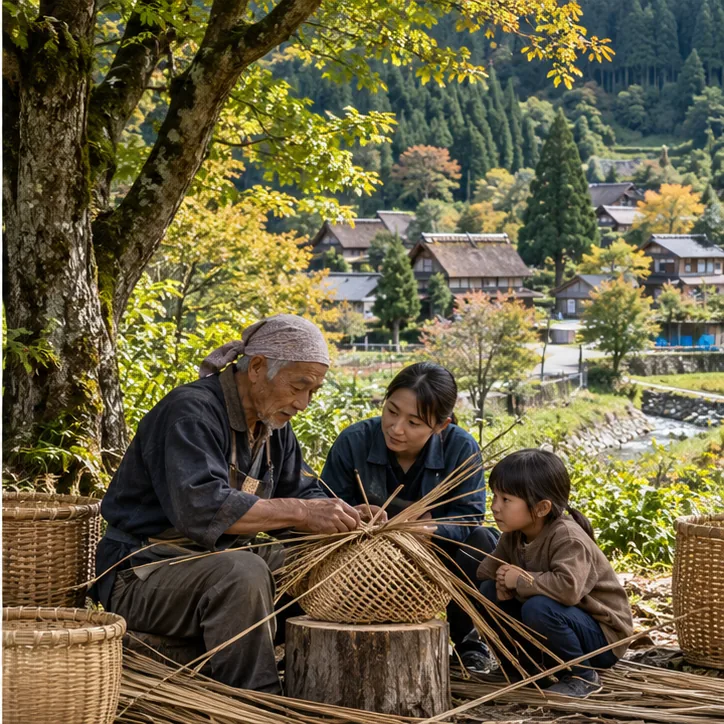
- Hand skills and operations to the next generation
- Prevent subdivision and uncontrolled development
- Extend continuity into neighboring areas
- Build ownership and funding structures for a century
Our goal: the vision outlives individuals and becomes part of local culture
THE NEXT ONE HUNDRED YEARS
The question is not what we build,PJ Valley — Working title / Lake Tazawa and Kakunodate
but what kind of land we leave behind.